


Choosing the Right Plywood: A Quick Guide

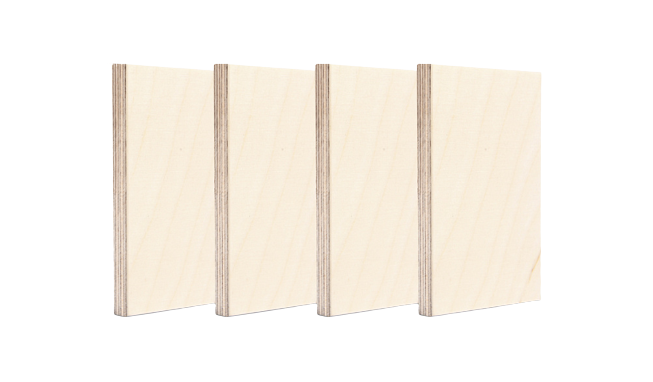
Most people choose plywood by thickness and price. Those are the two things least likely to cause a problem. What decides whether a sheet works for your job is the grade — two letters that describe the face and the back — and the size, because a sheet that spans the opening in one piece saves you a seam and a day.
Here is what the letters mean, what we carry, and how to pick without opening every bundle at the counter.
What plywood actually is
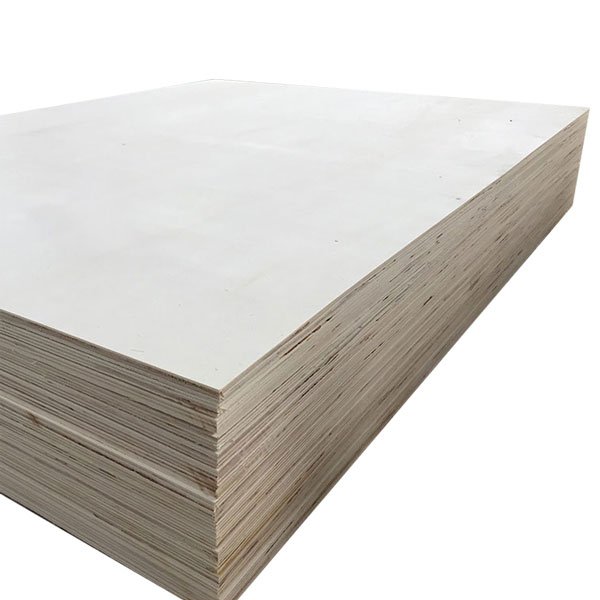
Plywood is built from thin layers of wood veneer glued together, with each layer’s grain running across the one below it. That cross-grain construction is the whole point: solid wood is strong along the grain and splits across it, and plywood is strong in both directions and stays flat.
It also means the edge tells you a lot. Count the plies on the edge of a sheet, and look at whether the layers are even, tight and free of gaps. A sheet with more, thinner plies is generally stiffer and holds a screw closer to the edge than one with fewer, thicker ones at the same thickness.
The plywood we carry is birch, made in the European Union — 100% birch veneer, which is why it is used where strength, rigidity and dimensional stability matter rather than where cost is the only question. European birch is a different sheet from a commodity import, and the grades below are the reason it is worth knowing which one you are holding.
The grade is the part nobody explains
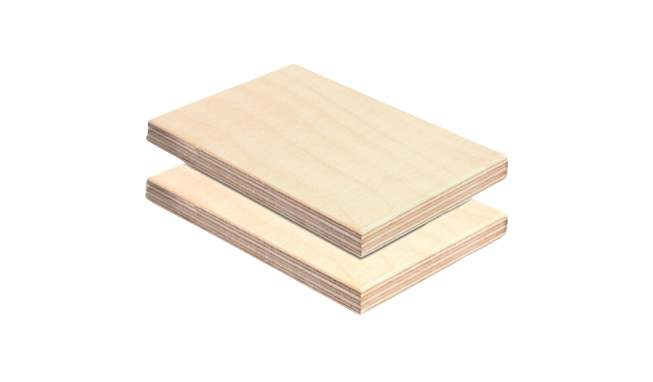
A grade like BB/BB or BB/CP describes two faces. The first letter is the good face, the one that will show; the second is the back. So BB/CP means a repaired-but-clean face and a rougher back, and it is the right sheet when only one side is seen.
| Grade | What it means |
|---|---|
| B | Practically no defects. Individual healthy encased knots up to 25 mm and hollow knots up to 5 mm are possible. |
| BB | Veneer repair is possible: on knots over 25 mm in diameter and on visual defects. The repairs are sound; you will see them. |
| CP | A back grade. More visible character than BB, used where the face is what matters and the back is hidden. |
| F / FF | Multiple defects and repair is not possible. Structural and hidden work only. |
The practical version: BB/BB when both sides show, BB/CP when one side shows, and F/FF only where nobody will ever look at it.
Sheet size, and the lengths most yards do not have
Everyone has 4 × 8. The sizes worth knowing about are the long ones, because a 10 or 12 foot sheet often turns a two-piece job into a one-piece job — no seam to fill, no joint to line up, and less waste than cutting down two shorter sheets.
- 4 ft × 8 ft, 3/4 in, grade BB/BB
- 4 ft × 10 ft, 3/4 in, grade BB/CP
- 4 ft × 12 ft, 3/4 in, grade BB/CP
Measure the span before you decide. If your opening is 9 ft 6 in, the 10 foot sheet is the cheaper sheet once you count the labour you are not doing.
Flexible plywood, and when you actually need it
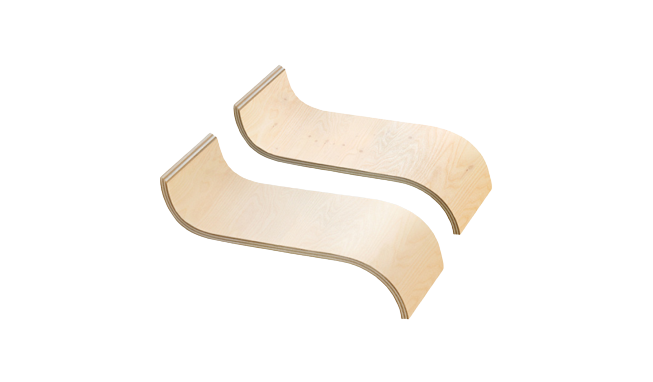
FlexPly is birch plywood built to bend. Its plies are laid up in a different configuration so the sheet can be formed to a radius on site rather than in a shop, which is what makes it useful for radial concreting and non-standard formwork, and for curved work in interior and outdoor design.
An elastic film resistant to cracking is available on it as an option. Where it earns its keep is concrete work: forming a curve out of flex plywood instead of building it up out of segments is a straight saving in both cost and time.
The numbers
| Property | Value |
|---|---|
| Thickness and plies | 9 mm / 7 plies · 12 mm / 9 plies · 15 mm / 11 plies |
| Bending strength, long grain | ≥ 120 MPa |
| Grades | B/BB, BB/BB, FF |
| Format | 1220 × 2440 mm and 2440 × 1220 mm (4 ft × 8 ft) |
The two formats are not a typo. Which way the grain runs decides which way the sheet bends, so ordering the right one matters more on flex plywood than on any other sheet in the yard. Full details are on the FlexPly page.
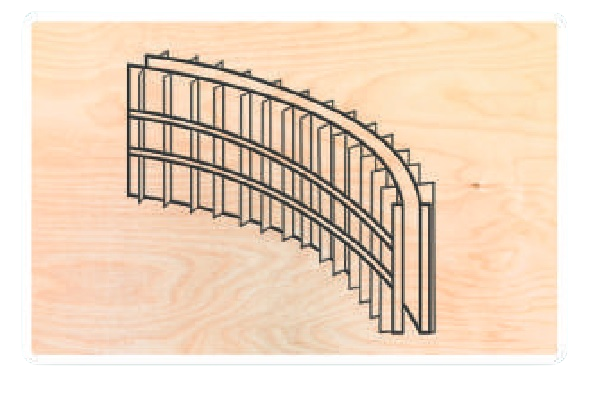
Two jobs it is made for. Forming a curved girder in one piece, instead of building the shutter up out of straight segments and filling the facets afterwards.
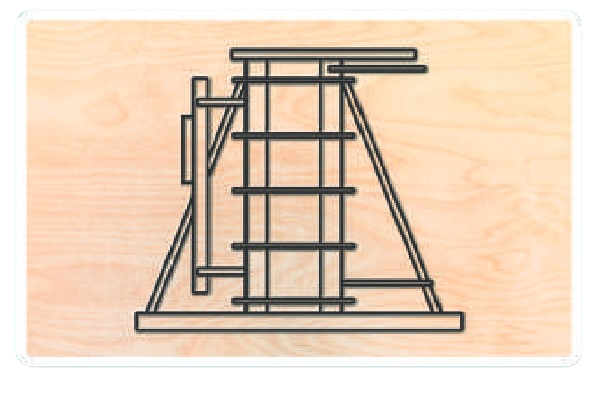
And forming round columns, where the alternative is a segmented shutter that leaves a flat every few inches and has to be rubbed out of the finished concrete.
Choosing for the job
| The job | What to reach for |
|---|---|
| Cabinet or built-in, both sides seen | Birch, BB/BB, 3/4 in |
| Cabinet or built-in, back against a wall | Birch, BB/CP, 3/4 in — pay for one good face, not two |
| A run longer than 8 ft in one piece | The 10 or 12 ft sheet, BB/CP |
| Curved formwork, radial concreting | FlexPly, thickness chosen from the radius |
| Round columns or a curved feature wall | FlexPly, and check which format bends the way you need |
| Hidden structural work | The lowest grade that carries the load |
What to check before it leaves the counter
- Read both letters of the grade, not just the first. BB/CP and BB/BB look identical from the top of the stack.
- Look at the edge. Even, tight plies with no gaps or voids; count them if the sheet is going to be screwed near an edge.
- Check it is flat and has been stored flat. A sheet that has taken a bow standing on a corner will fight you all day.
- Confirm the format on flex plywood — 1220 × 2440 and 2440 × 1220 bend in different directions.
- Measure the span first. The longer sheet is often the cheaper answer once the seam is priced in.
Where to get it
Plywood is carried at all three counters — Concord, Barrie and Mississauga. Which sizes and grades are on the floor changes through the week, so call the branch nearest you or ask at the counter, and we can order anything in the range of a brand we carry. The product pages are Plywood and Flex Plywood.