


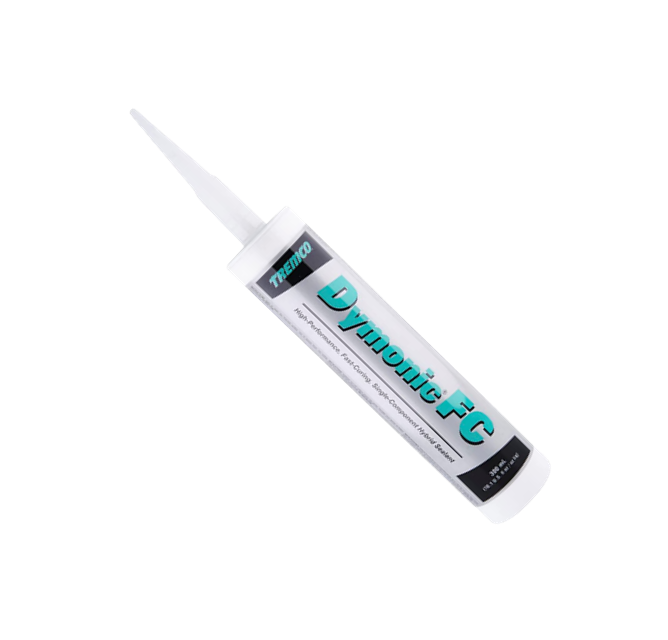
Dymonic FC adhesion to concrete and aluminum
Posted
The reported test values, what they leave unanswered, and what to check for your joint.
Tremco’s Dymonic FC data sheet reports typical ASTM C794 adhesion results of 18–22 pli for concrete and 20–25 pli for aluminum. The sheet also lists 80–98 N and 89–112 N respectively. These are typical test results, not a promised result for your joint.
The same sheet describes adhesion once fully cured. Don’t use its one-hour skin time or three-to-four-hour tack-free time as the full-cure deadline: it gives no full-cure schedule.
What the adhesion figures tell you
Checking a specification or submittal? Keep each value beside its substrate and ASTM C794 designation. Both appear in Tremco’s typical physical properties table.
The adhesion rows don’t identify concrete age or moisture condition, aluminum finish, primer use, or cure duration before testing. You can’t use those rows alone to approve damp concrete, painted aluminum, or a particular primer arrangement.
Before you approve the actual surfaces
Damp concrete? Stop there. Tremco says not to apply Dymonic FC over damp or contaminated surfaces. A reported concrete adhesion value doesn’t remove that restriction.
For a concrete-to-aluminum joint, write down the concrete’s condition and the aluminum’s actual finish or coating. Send those details to Tremco Technical Services and ask for the preparation, primer and adhesion-check requirements for that combination. The supplied sheet doesn’t provide that procedure.
If the bead will be painted, check the paint too. Tremco says paintability doesn’t establish adhesion to or compatibility with every paint, and directs readers to Technical Bulletin S-09-05 or Technical Services.
Keep skin time separate from cure
The sheet lists a one-hour skin time under ASTM C679. Its separate tack-free row gives three to four hours at 23°C and 50% relative humidity. Those temperature and humidity conditions belong to the tack-free row.
Check with Tremco before you schedule work that depends on cured adhesion. Ask how long your joint needs to cure under your site conditions, then plan that work around the cure period.
Open the [Dymonic FC product details](/dymonic-fc/) while you prepare your purchase enquiry. Include the substrate condition, aluminum finish, joint dimensions and planned application date. Still have questions to settle? Those details give you specifics to ask about.